

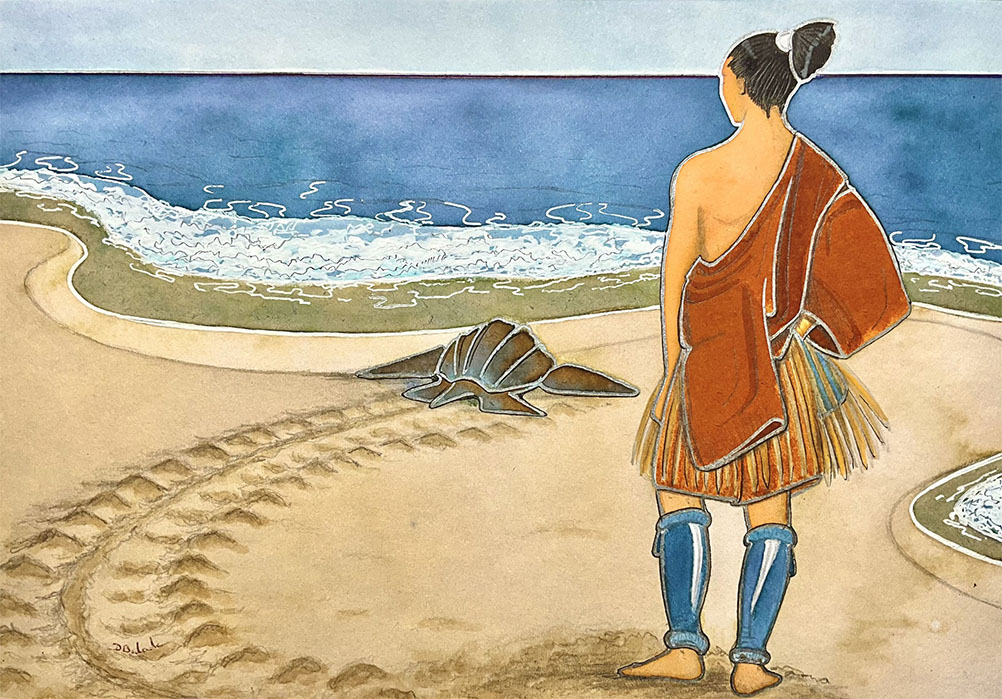

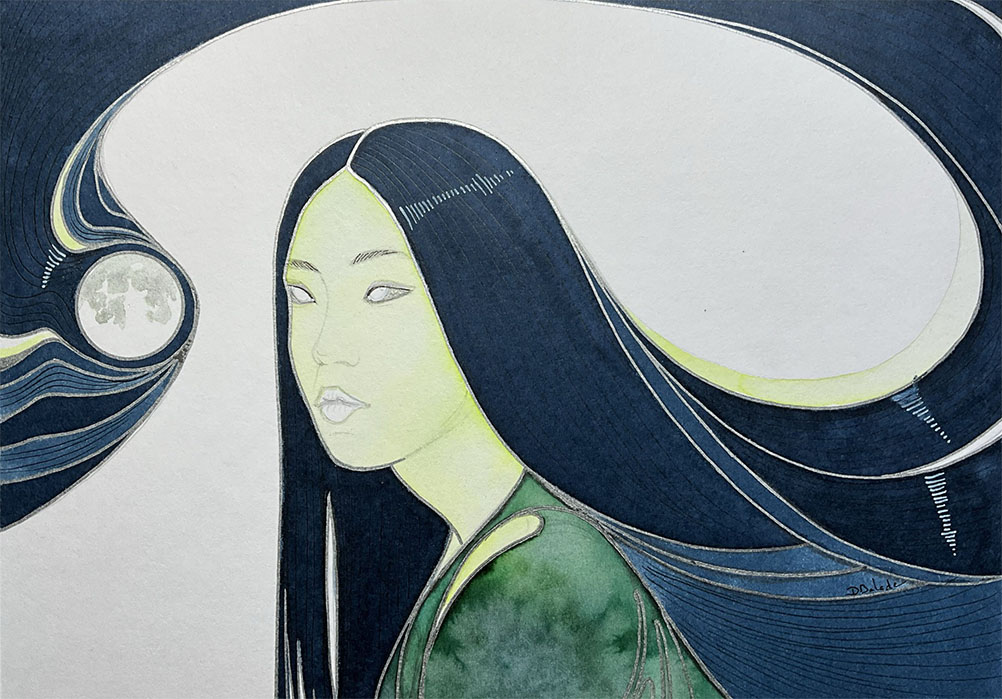
Urashima Tarô / 浦島 太郎
Urashima Tarō
Urashima Tarō is one of the great tales of Japanese folklore, and its origins can be traced back to the country’s foundational texts. It is mentioned in the Nihon Shoki (720) and the Man’yōshū, where the idea of a fisherman swept away to a supernatural world is already present. These ancient origins suggest that the story has transformed over the centuries, incorporating Shinto elements—such as the sacred relationship with nature—and Buddhist influences, notably the idea that time flows differently in different realms.
Among the symbols illustrated in this tale, the underwater palace, Ryūgū-jō, can be seen as a paradise or a realm of the afterlife, while the tamatebako box symbolizes the inevitability of old age and death. This tale thus reflects central themes of Japanese thought: impermanence, nostalgia, and acceptance of fate.
To this day, Urashima Tarō continues to inspire both classical and popular Japanese culture: he appears in Noh and Kabuki plays, and has also been adapted into manga, animated films, and even video games. His story remains a reflection of more universal human concerns about time and memory.
David Balade offers his interpretation of Urashima Tarō in a dozen original works (mixed media on paper, watercolor, ink, pastel).